Free Webinar: “ELISA Test – Theory and Practical Applications”
2026-05-14
Recruitment opens for the Fulbright STEM Impact Award 2027–28
2026-05-19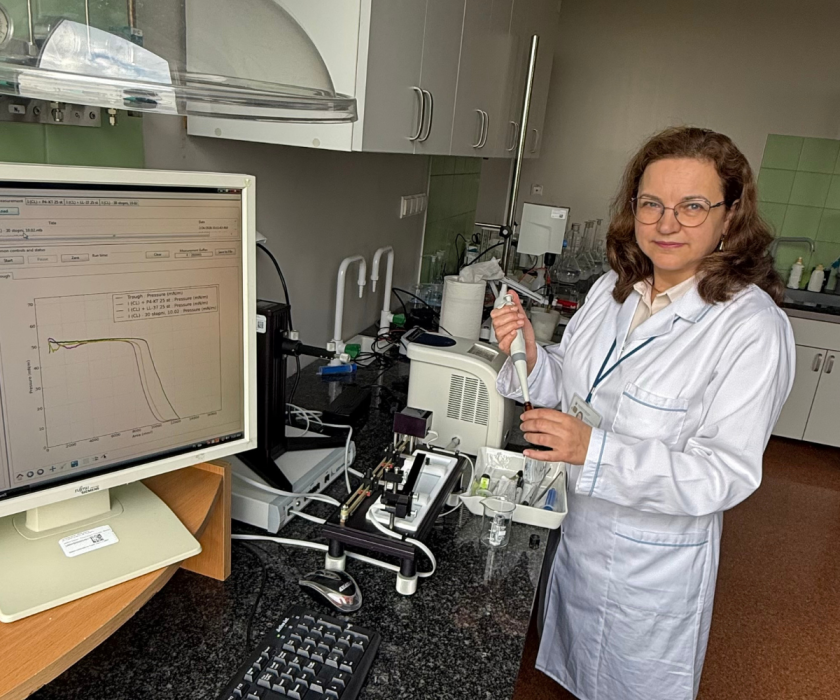
Researchers at Wroclaw Medical University are working on an alternative to traditional antibiotics. The project, carried out as part of the “Young Science” nanogrant programme, combines advanced physicochemistry with everyday challenges in dermatology.
Dr Iwona Golonka’s project is based on research into the physicochemical properties of active substances conducted at the Department of Physical Chemistry and Biophysics of Wroclaw Medical University under the supervision of Professor Witold Musiał.
The inspiration for the study came from earlier research on the stability of ascorbic acid, quercetin, and the impact of UV radiation on the durability of future medicinal products. A key stage of the project was a research internship at the Medical University of Gdańsk, where Dr Golonka gained experience working with solar radiation simulators and in the synthesis of lipopeptides.
“My research interests focused on the stability of substances, and the next step was to combine studies on their UV stability with the analysis of the activity of modern antimicrobial peptides,” explains the researcher.
A bacterium as a therapeutic challenge
One of the therapeutic targets is Cutibacterium acnes — a bacterium that plays a key role in the pathogenesis of acne vulgaris. Although it is part of the skin’s natural microbiota, under conditions of disrupted balance it can trigger inflammation, produce lipolytic enzymes, and form biofilms. An additional challenge is its increasing resistance to antibiotics, making it an important yet difficult therapeutic target in modern dermatology.
Peptides as an alternative to antibiotics
In response to these challenges, antimicrobial peptides, including analogues of the human peptide LL-37, are being intensively investigated. These compounds exhibit a dual mechanism of action — they not only combat bacteria but also modulate the body’s immune response. As a result, they show significant clinical potential and may in the future become a new class of dermatological therapies.
An additional advantage is the possibility of modifying their structure, allowing researchers to tailor the properties of these molecules more precisely to patients’ needs and enhance their effectiveness where traditional antibiotics prove insufficient.
Membrane models as a key to understanding mechanisms
One of the greatest challenges of the project was designing a model bacterial membrane that would accurately reflect the properties of Cutibacterium acnes.
“Available literature data did not allow for direct reproduction of the membrane under experimental conditions using the Langmuir method, which made it necessary to develop and optimise our own monolayer model,” emphasises Dr Golonka.
This approach enabled the creation of an innovative system for analysing interactions between potential drugs and bacterial membrane components.
Research findings
Preliminary results have already provided interesting observations. The researchers found that the composition of the model membrane directly affects its elasticity and degree of structural organisation, which may help better understand the mechanisms by which active substances interact with bacterial cell membranes under different environmental conditions.
At the same time, incorporating UV radiation into the analyses makes it possible to predict how drugs may behave in everyday use, particularly under exposure to light, which patients naturally encounter.
Developing research competencies
The implementation of the project as part of the Nanogrant programme also enabled the development of advanced competencies in biophysical methods. The work carried out by Dr Iwona Golonka at the Department of Physical Chemistry and Biophysics demonstrates that fundamental research remains an important element in the development of modern and safe dermatological therapies that address the needs of contemporary medicine.