Clarivate webinar for PhD students: choosing where to publish responsibly
2026-05-08
New Scholarship Programme for Young Researchers
2026-05-14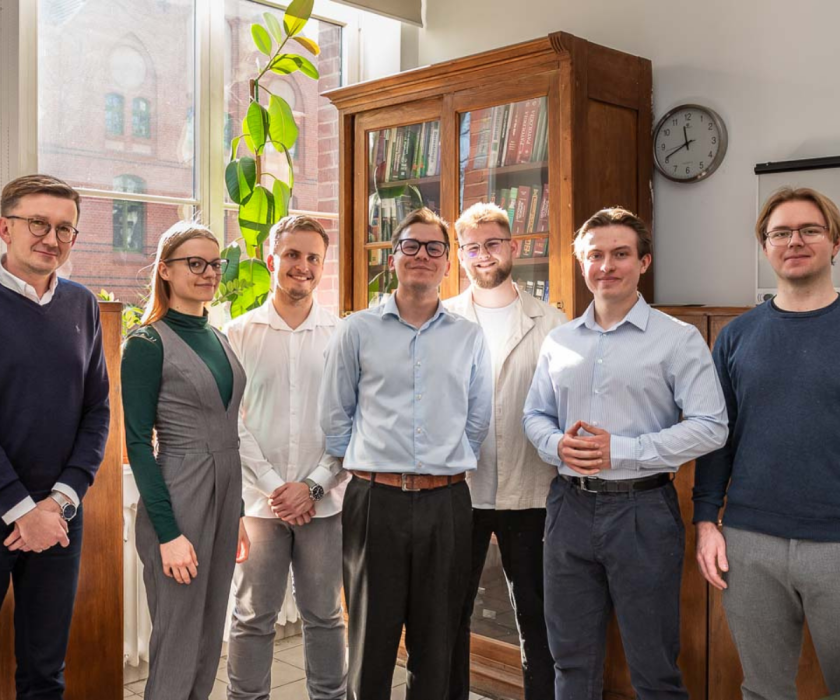
How can eye disease be detected before it begins to take away a person’s sight? This question is at the heart of the “Insight Eye” project, which has received funding from the Student Activity Fund (FAST) Program. Students at Wroclaw Medical University aim to combine retinal screening, ophthalmic image analysis, and artificial intelligence tools with educational outreach and free eye examinations for residents of Wroclaw.
The goal of the Medical Image Analysis and Research in Pathology (MIARP) Student Research Group project is to improve the speed and accessibility of retinal screening while increasing public awareness of eye disease prevention. The initiative combines research, technology, and education to address real healthcare needs in the region.
The project focuses on the early detection of eye diseases that often develop without symptoms. Glaucoma, one of the leading causes of irreversible blindness worldwide, does not produce clear symptoms in its early stages and, if left untreated, can lead to permanent vision loss. The same applies to age-related macular degeneration (AMD), one of the main causes of central vision loss in people over 50.
Artificial intelligence will detect the changes
“Regular retinal screening makes it possible to identify pathological changes before visible visual field defects appear, which significantly increases the chances of effective treatment,” says Bartosz Poniewierka, a fifth-year medical student and president of the Medical Image Analysis and Research in Pathology Student Research Group.“When creating the project, we wanted to combine scientific activities with a real impact on public health.”
The first stage of the project involves creating a database containing retinal images and detailed descriptions of diagnosed ophthalmic diseases and comorbidities. The research material will come from patients of the University Clinical Hospital in Wrocław, and data collection will begin after obtaining all necessary approvals from the bioethics committee. At the same time, the team will develop an artificial intelligence algorithm to enable early detection of pathological changes.
“Building the database is the foundation of the project. Without high-quality, well-described data, it is impossible to create a reliable diagnostic tool. We want the algorithm not only to accelerate image analysis, but also to genuinely improve access to screening,” explains Bartosz Poniewierka.“A major advantage of our diagnostic method is the use of a specialized retinal imaging camera that does not require pupil-dilating eye drops.”
Detecting disease before it takes away sight
An equally important part of the project is its social dimension. After completing the research phase, the Medical Image Analysis and Research in Pathology Student Research Group plans to implement educational and preventive initiatives for residents of Wrocław.
The initiative will include a series of lectures devoted to the consequences of vision deterioration and vision loss, as well as the importance of regular ophthalmological check-ups. The team also plans to organize free eye examinations at local events, including one specifically for people experiencing homelessness.
“We want to go beyond the academic environment,” emphasizes Bartosz Poniewierka. “Technology alone is not enough if it is not accompanied by education and changes in health habits. That is why meetings with residents and providing access to examinations available to everyone are such important parts of the project.”
Combining advanced analytical tools with preventive initiatives is expected not only to contribute to the technological development of Wroclaw Medical University but also to improve the health of Wrocław residents and increase awareness of eye diseases and their early detection.
The Medical Image Analysis and Research in Pathology (MIARP) Student Research Group is an interdisciplinary team of students combining interests in pathology, microbiology, and modern information technologies. The group operates under the supervision of Emil Paluch, Associate Professor at Wroclaw Medical University, and Professor Piotr Donizy.
Members of the research group focus on the use of modern methods — including medical image analysis, spectroscopy, and artificial intelligence tools — to improve diagnostic processes and support the development of personalized medicine.