
NANOGRANTS – micro-funding that keeps great ideas moving
Launching soon under the Young Science umbrella, NANOGRANTS offer rapid, flexible support for students, PhD candidates, and early-career researchers who need to cover sudden, high-impact costs. Awards of up to 5 000 PLN are available on a rolling basis—no long forms, no long waits.
Why apply?
Small injections of cash prevent project slow-downs, let you test bold hypotheses, and expand your professional network—all while sharpening the competitive edge of your future grant proposals. One quick application. A decision in days. Big momentum from a nano boost.

Awarded Funding:
- Dorota Wójcik-Pastuszka "Release of prednisolone disodium phosphate from an intra-articular hydrogel based on sodium hyaluronate"
- Agnieszka Gola - "Integrated physicochemical characterisation of smart polymers with potential applications in carrier systems, using thermal, spectroscopic and microscopic methods."
- Justyna Pilch - "Enhancing diagnostic and clinical skills in melanoma: from fundamentals to advanced dermoscopy"
- Kamila Florek - "Evaluation whether influenza vaccination at discharge is safe and effective in reducing adverse events and mortality among high-risk cardiology patients"
- Iwona Golonka -"Assessment of physicochemical changes of a model bacterial membrane under the influence of newly synthesized antimicrobial peptides and solar radiation"
- Bartosz Poniewierka - "Microbial species identification using titanium nanotubes-based Surface Enhanced Raman Spectroscopy"
- Aleksandra Mikołajczyk - "Mikroneurografia w niewydolności serca. Porównanie aktywności współczulnej w ostrych i przewlekłych stanach"
- Oliwia Ciosek - "Development and Pharmaceutical Evaluation of Semi‑Solid Compounded Formulations Containing Cannabis flos Oil Extract"
- Agnieszka Kostrzębska - "Thermal analysis of the properties of dermatological hydrogels containing various antibiotics by DSC method"
- Krzysztof Kraik - "Medical Statistics Competency Development"
- Natalia Urban - "Scientific training for systematic reviews"
- Paulina Mostyńska - "Midwife Support for Arrested Labor – An Integrated Approach: Biomechanics, Anatomy, and Traditional Methods"
- Marta Woźniak - "Clinical studies as a foundation for medical research"
- Patrycja Lipska - "Therapeutic potential of berberine in lowering the resistance threshold of the skin microbiota of patients with primary cutaneous lymphomas."
- Sofia Rayevska - "Advanced plant-based hydrogels as biocompatible materials for creating drug delivery systems using SSE (Semi Solid Extrusion) 3D printing."
- Aleksandra Górzyńska - "Genomic analysis of microorganisms based on the example of a collection of Saccharomyces cerevisiae strains isolated from clinical and non-clinical materials."
- Laura Jonderko - "Participation in the European Lung Cancer Congress 2026 - Targeted Exosome Systems for miRNA Delivery in Lung Cancer"
- Justyna Plich - "Translational Ophthalmic Oncology: Linking Fundus Imaging with Tumor Biology in Uveal Melanoma"
- Martyna Nowak-Perlak - "Clinical studies as a foundation for medical research"
- Katarzyna Lipke - "Comparison of the cytotoxic effects of myristicin and nutmeg extract in the SH-SY5Y neuronal cell line"
- Wiktor Maciejewski - "Development of a hydrogel containing model substances with anti-inflammatory properties together with nanoparticles with a potential antibacterial effect."
- Monika Gasztych - "Enhancing the international visibility of the NCN Miniatura 8 research project by participating in the 15th World Meeting on Pharmaceutics."
- Piotr Kupczyk - "Searching for mechanisms supporting γδ T cell infiltration and antitumor immune response: immunosuppressive role of tumor angiogenesis."
Smart polymers with potential applications in carrier systems, using thermal, spectroscopic and microscopic methods - Agnieszka Gola
Integrated physicochemical characterisation of smart polymers with potential applications in carrier systems, using thermal, spectroscopic, and microscopic methods.
This project aims to conduct a comprehensive physicochemical characterisation of a polymer material synthesised in five independent syntheses in an earlier project. The research will employ TG, DSC, PXRD, NMR and SEM techniques. The planned analyses will enable the determination of particle morphology and size, thermal parameters (e.g., melting point, weight loss, decomposition temperature, thermal stability), as well as the degree of crystallinity and the presence of impurities.
The results obtained will enable the influence of crosslinking agent chain length on the physicochemical properties of the resulting polymers to be assessed, and the material best suited to potential drug carrier applications to be identified. The results of the research are planned to be published in a renowned scientific journal. It is also assumed that the material with the most favourable physicochemical properties will be used in a new research project concerning its ability to bind with model medicinal substances. The results of the proposed research will provide important physicochemical data on thermosensitive systems designed to meet specific application requirements. This research is of great scientific and industrial importance and will contribute to advancing knowledge in fields such as medicine and pharmacy.
This scientific work is directly related to the implementation of my scientific development and is currently being carried out at the Department of Physical Chemistry and Biophysics at the Wroclaw Medical University.
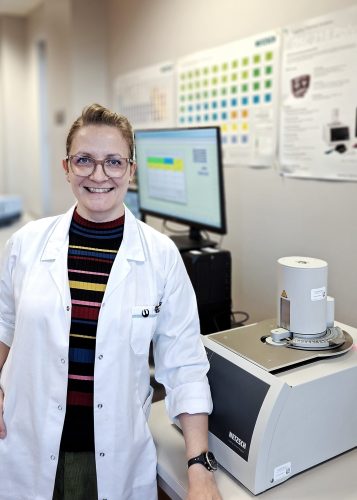
Thermal analysis of the properties of dermatological hydrogels containing various antibiotics by DSC method - Agnieszka Kostrzębska
The aim of the project is to evaluate the thermal properties and interactions of dermatological hydrogel components with antibiotics (tetracycline, doxycycline, clindamycin) based on carbomer, using differential scanning calorimetry (DSC). The study will determine the effects of active substances on the physicochemical stability, structure, and durability of hydrogels, including changes in viscosity, dehydration, network destabilization, and potential decomposition or component interactions.
The analysis of thermal profiles, including after long-term storage, will enable the assessment of the impact of environmental conditions and the identification of phase changes. The results obtained will be used to select the most stable systems and optimize the formulations of safe and effective dermatological preparations. The project is aligned with the current needs of the pharmaceutical and cosmetics markets in the development of modern topical drug delivery systems. Potential beneficiaries of the results will include: manufacturers of drugs and dermocosmetics, research teams working on new carriers for active substances, pharmacists, and dermatologists.
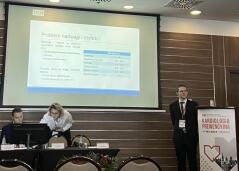
Collaboration Nanogrant of Paulina Mostyńska, MSc
As part of the Nanogrant project, Ms Paulina Mostyńska, MSc, delivered a lecture entitled “Supporting a midwife when labour progress is inhibited, an integrative approach combining anatomy, biomechanics, and traditional methods” at the 2nd International Midwifery Symposium “Elija Sotera.” The event took place at the Department of Gynaecology and Obstetrics of the University Hospital in Split on November 7 to 8, 2025.
This symposium is one of the most prestigious scientific meetings for midwives in Croatia. Its main goal is to improve cooperation among perinatal healthcare professionals. The programme covered topics such as home birth, fear of childbirth, preterm labour, thrombophilia, Rh factor immunisation, emergency cases in gynaecology, and others.
The organisers were the Faculty of Health Studies of the University of Split, the Croatian Chamber of Midwives, and the University Hospital Centre in Split. The symposium bears the symbolic title “Elija Sotera,” in honour of the first known midwife from this region, who lived in the 2nd century in Salona.
Professor Diana Aranza from the Faculty of Health Studies at the University of Split expressed her willingness to establish close scientific and substantive cooperation to develop midwifery and nursing education programmes at our University.
Ms Mostyńska conducts her research at the Department of Midwifery of Wroclaw Medical University, headed by Dr Monika Przestrzelska, Associate Professor. She is also preparing her PhD dissertation under the supervision of Dr hab. Anna Rozensztrauch, Associate Professor, with Dr Anna Prokopowicz as auxiliary supervisor.

Antitumor immune response: immunosuppressive role of tumor angiogenesis - Piotr Kupczyk
Immunotherapy is currently one of the fastest-growing areas of biomedical science. Its goal is to harness and strengthen the immune system’s potential in the fight against cancer. Immunotherapy uses, among other approaches, cellular components of the immune system such as gamma delta (γδ) T lymphocytes. With established methods for their isolation and expansion, these cells can be administered near a tumor, where they activate their unique cytotoxic functions and can effectively eliminate cancer cells. Immunotherapy also includes the use of cellular antigens, which stimulate the infiltration and cytotoxic activity of immune cells within the tumor microenvironment and induce a strong anti-tumor immune response.
As part of the Nanogrant project entitled "Searching for mechanisms supporting γδ T cell infiltration and antitumor immune response: immunosuppressive role of tumor angiogenesis" (project ID: IDUB.E261.24.014), I will participate in the scientific conference TIMO: Tumor Immunology Meets Oncology, which will take place on 7–9 May 2026 in Brandenburg, Germany. The conference serves as a forum for leading research groups in immunotherapy and translational immunology from top institutions worldwide. It was initiated by Professor Barbara Seliger, Head of the Institute of Translational Immunology at the Brandenburg Medical School.
The research conducted by Professor Seliger and her collaborator, Dr Chiara Massa, aligns closely with the research area I am developing within the scientific work of the Department of General and Experimental Pathology. This invitation will allow me to deepen my knowledge, acquire new skills, and establish valuable scientific collaborations. Participation in the conference will also support efforts to build a similar research team at Wroclaw Medical University.
Medical Statistics Competency Development for Krzysztof Kraik - WMU Student
Nanogrant - 'Medical Statistics Competency Development for Wroclaw Medical University Student' enables Krzysztof Kraik, a student at Wroclaw Medical University, to attend the course 'Medical Statistics Program' offered by Stanford School of Medicine/Stanford Center for Health Education. The aim of this Nanogrant is to enable the acquisition of the skills required for statistical analysis of data collected during research. Participation in the course enabled the student to independently conduct statistical analyses of previously collected data, improve the overall quality of statistical analyses, and accelerate the completion of scientific research conducted by Wroclaw Medical University students.
Release of prednisolone disodium phosphate from an intra-articular hydrogel based on sodium hyaluronate - Dorota Wójcik-Pastuszka
This project focuses on the development of model analgesic hydrogels intended for intra-articular administration. Their analgesic effect will be achieved by incorporating prednisolone sodium phosphate into a sodium-hyaluronate-based matrix, ensuring good biocompatibility.
Developing an innovative, sustained-release analgesic hydrogel could significantly improve patient comfort and the overall quality of joint pain therapy, while also minimizing the need for frequent dosing.
This project forms part of a broader research effort focused on intra-articular preparations that could be used to treat joint inflammation. These include potential silica-coated intra-articular implants incorporating bupivacaine hydrochloride, betamethasone, and sodium hyaluronate.

Assessment of physicochemical changes of a model bacterial membrane under the influence of newly synthesized antimicrobial peptides and solar radiation - Iwona Golonka
The project focuses on investigating physicochemical changes occurring in a model bacterial membrane of Cutibacterium acnes under the influence of newly synthesized antimicrobial peptides and simulated solar radiation. Lipid monolayers mimicking the bacterial membrane will be analyzed using the Langmuir technique. The research includes measurements of isotherms, hysteresis, and surface pressure–time relationships to evaluate membrane stability and structural alterations. The aim is to determine how peptides and solar irradiation affect the properties of the model membrane. The results may contribute to a better understanding of these systems and support future exploratory studies.
JBI Comprehensive Systematic Review Training Program - Natalia Urban
As part of the Nanogrant, I participated in the specialized JBI Comprehensive Systematic Review Training Program, which covered the entire process of preparing a systematic review using the JBI SUMARI tool. The acquired competencies in JBI methodology, literature searches, critical appraisal of studies, and quantitative and qualitative analysis will be utilized in my research activities in the health sciences, including in the Student Research Group Evidence-Based Healthcare. These skills will be particularly useful in preparing a systematic review on the effectiveness of isokinetic exercises in patients after ACL reconstruction, conducted in collaboration with international JBI centers, including the JBI Center of Evidence-Based Practice Germany at Brandenburg Medical School (Germany) and the University of Gothenburg (Sweden). The Nanogrant contributed to the development of my research skills.