13th Congress of the Polish medical diaspora
2026-05-25
Applications open for the 9th edition of the Young Talents Forge summer school
2026-06-03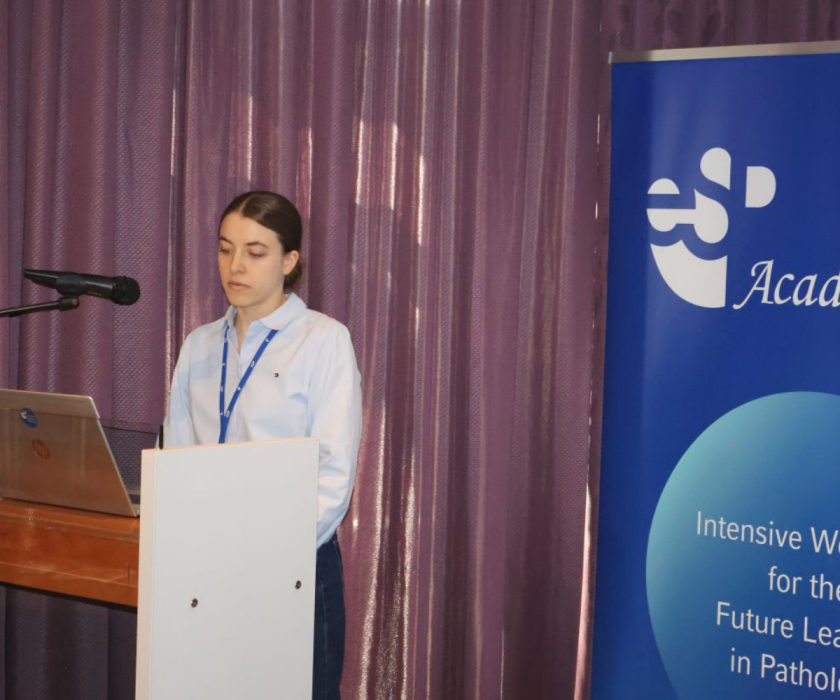
Dr. Karolina Mazurec from Wroclaw Medical University has been selected as one of the laureates of ESP Academy 2026 — a prestigious educational program organized by the European Society of Pathology for young pathologists and researchers developing careers in academic and translational pathology.
Dr. Karolina Mazurec is an assistant at the Department of Clinical Pathology at Wroclaw Medical University and a resident physician at the Department of Pathomorphology and Clinical Cytology of the University Clinical Hospital in Wrocław. Her residency supervisor and PhD advisor is Prof. Agnieszka Hałoń. In this year’s edition of ESP Academy, she was selected through a highly competitive multi-stage recruitment process. She is the third participant and the first woman from Poland in the history of the program, as well as the youngest laureate of the current edition.
ESP Academy is an intensive educational initiative aimed at supporting the scientific, academic, and professional development of young pathologists. The program focuses on translational and applied research in pathology and includes workshops led by world-renowned experts, presentations of participants’ research projects, career development sessions, and networking opportunities.
This year’s edition took place in Riga and gathered leading representatives of the European Society of Pathology, including Prof. Peter Schirmacher, former ESP President, Prof. Xavier Matias-Guiu, current ESP President, and Prof. Irene Esposito, future President of the Society.
“Participation in ESP Academy is a great honor for me, but also an opportunity to confront my research ideas with the experience of experts and young scientists from different European centers. What was particularly important to me was the fact that the project developed in Wrocław attracted the interest of the international pathology community,” says Dr. Karolina Mazurec.
During the event, Dr. Mazurec presented a research project focused on the use of the p16/Ki67 Dual Stain test in the diagnostics of cervical lesions in the context of the proposed update of the LAST recommendations (Lower Anogenital Squamous Terminology), international guidelines concerning the diagnosis of HPV-related lesions.
The project focuses on precision diagnostics aimed at detecting high-risk precancerous lesions as early as possible while reducing unnecessary diagnostic procedures in low-risk patients. One of the main objectives of the study is to evaluate the association between positive p16/Ki67 Dual Stain results and the presence of high-grade precancerous lesions in patients undergoing cervical histopathological diagnostics.
Particular attention is given to borderline and diagnostically challenging lesions, where microscopic interpretation may remain ambiguous even for experienced pathologists. The planned multicenter study will involve cooperation between institutions specializing in gynecological pathology and HPV diagnostics. Researchers aim to determine whether the Dual Stain test can improve diagnostic accuracy, increase interobserver reproducibility, and support more precise risk assessment of high-grade lesions.
“In pathology, it is increasingly important not only to establish a diagnosis, but also to assess clinical risk as precisely as possible. The p16/Ki67 Dual Stain test may support diagnostic decision-making, especially in cases that are difficult to interpret. This may ultimately help provide more personalized care for patients,” emphasizes Dr. Mazurec.
The project continues previous research on HPV-related lesions and modern diagnostic methods supporting cancer prevention. Results from a 10-year retrospective analysis have already been qualified for oral presentation at EUROGIN 2026 — one of the world’s leading scientific congresses dedicated to HPV infections and cancer prevention.
Dr. Karolina Mazurec’s selection for ESP Academy 2026 represents an important distinction within the international pathology community and confirms the high scientific potential of young researchers affiliated with Wroclaw Medical University. The project may contribute to the further development of personalized prevention strategies for HPV-related cancers and to improving the precision of modern pathological diagnostics.