Awards for Student Activity
2025-11-18
Discover, Learn, Advance — Join Top Medical Summer Schools in Europe
2025-11-20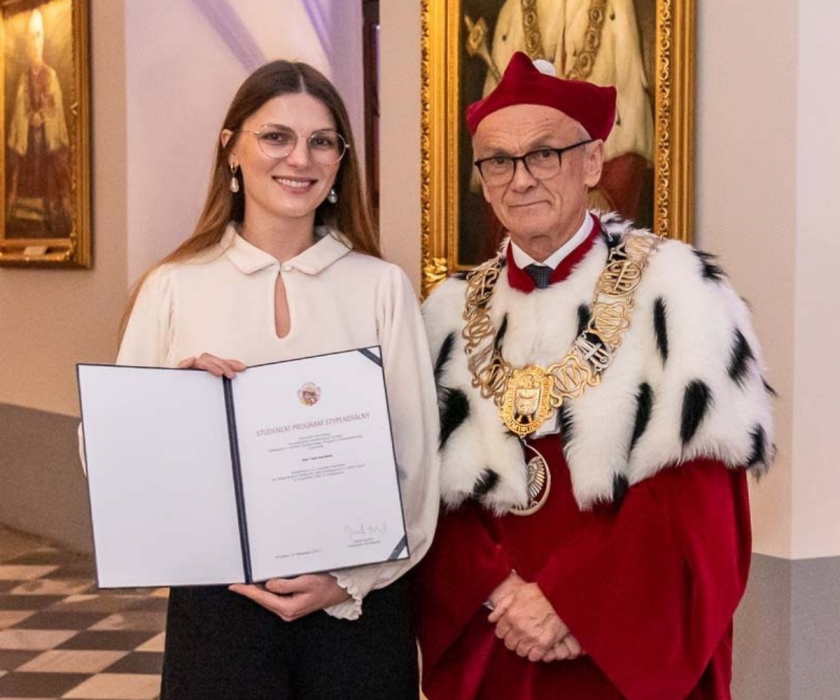
Three doctoral students from Wroclaw Medical University have received the Ludwik Hirszfeld Scholarships. These distinctions are awarded for exceptional achievements in the biological and medical sciences. The list of laureates of the Student Scholarship Programme was announced during the celebration of Science Day in Wrocław.
The Student Scholarship Programme is a competition aimed at young researchers conducting their work in the capital of Lower Silesia. Funding comes from the city budget, while applications are assessed by a committee composed of experts in their respective scientific fields. The programme includes eight categories, with a maximum of three laureates in each. This year, all Ludwik Hirszfeld Scholarships were awarded to doctoral students from Wroclaw Medical University: Dr Julia Karska, Dr Adam Gurwin, and MSc Kamil Rodak.
Julia Karska
Julia Karska is a graduate of the medical programme at UMW. She is conducting her PhD project entitled Expression of surface antigens by peripheral blood mononuclear cells in patients diagnosed with deficit schizophrenia, supervised by Dr hab. Patryk Piotrowski, Prof. UMW, from the Department and Clinic of Psychiatry, and Dr hab. Edyta Pawlak, Prof. PAS, from the Institute of Immunology and Experimental Therapy, Polish Academy of Sciences.

Her work focuses on deficit schizophrenia, which is characterised by a more severe course and lower quality of life compared to other subtypes of the disorder. Its symptoms are difficult to treat and significantly affect daily functioning.
A growing body of research suggests that the development of deficit schizophrenia may be influenced by chronic, subclinical inflammation — an abnormal activation of the immune system,” explains Dr Julia Karska. “This is why my research focuses on peripheral blood mononuclear cells (PBMCs) — immune cells such as monocytes and lymphocytes that play a key role in the inflammatory response. Their surface contains Toll-like receptors (TLRs), which recognise signals from viruses and bacteria and trigger the body’s defence mechanisms. Studies have shown that TLR expression is disrupted in individuals with schizophrenia, and abnormal PBMC responses contribute to chronic inflammation.
The doctoral researcher aims to identify biomarkers that could support the diagnosis of schizophrenia and improve prognosis. In the long term, her findings may contribute to the development of personalised medicine.
Karska considers her greatest achievement to be her research internship at APC Microbiome at University College Cork, Ireland — one of the leading centres studying the microbiome and its role in mental health. For two months, under the supervision of Prof. Sarah Kittel-Schneider, she worked on modelling psychiatric disorders using human induced pluripotent stem cells (hiPSCs). She also completed a confocal microscopy course, expanding her skills in high-resolution analysis of neuronal models.
Adam Gurwin
Adam Gurwin also graduated from the Faculty of Medicine at UMW. He is currently completing his urology residency at the Department of Minimally Invasive and Robotic Urology at the University Urology Centre. As part of his PhD, Prospective analysis of the diagnostic effectiveness of shear-wave elastography (SWE-US) in detecting prostate cancer, he is developing a new diagnostic model for prostate cancer — the most common malignancy in men.
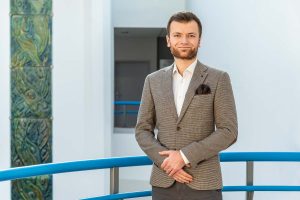
His research, supervised by Prof. Bartosz Małkiewicz, combines two research directions: using SWE-US (an advanced ultrasonography technique) as an innovative imaging tool in prostate cancer diagnostics, and applying artificial intelligence (AI) to analyse multiparametric MRI (mpMRI) and SWE-US images.
Our results show that SWE-US performs comparably to mpMRI, and in some cases even detects cancerous lesions that mpMRI misses,” explains Dr Adam Gurwin. “These techniques complement each other very well, and combining them has enabled us to achieve 100% detection of clinically significant cancers while reducing the number of biopsy cores and thus lowering complication risk. This may help define a new diagnostic model and potentially move away from burdensome systematic biopsies.
In parallel — in collaboration with Markus Bauer from the Institute for Applied Informatics (InfAI) in Leipzig and under the supervision of Prof. Bogdan Franczyk and Ingolf Römer — Gurwin developed the SWJEPA algorithm. This system analyses mpMRI and SWE-US images of the prostate, identifying suspected cancer foci. The tool was presented at the prestigious International Conference on Pattern Recognition (ICPR 2024) in India and is currently undergoing clinical testing. It is one of the first studies of its kind worldwide.
“Developing and implementing this AI algorithm is my greatest scientific success. It proves that Polish science not only keeps pace with global trends but can also set new directions in modern oncological diagnostics,” adds Dr Gurwin.
Kamil Rodak
Kamil Rodak is an embryologist and laboratory diagnostician. He completed medical analytics at the Faculty of Pharmacy of UMW. In the Department of Laboratory Diagnostics, he is pursuing his PhD titled Assessment of arachidonic acid derivatives and oxidative stress markers in seminal plasma of men with reduced fertility, supervised by Prof. Ewa Kratz.
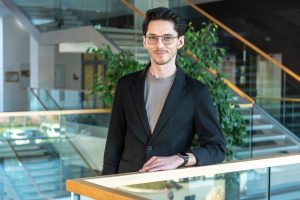
His research focuses on identifying biomarkers of male infertility — especially idiopathic infertility, where semen parameters remain normal and no specific disorder can be diagnosed, making treatment difficult.
I focused on analysing differences in the concentrations of polyunsaturated fatty acids, arachidonic acid derivatives, and oxidative stress markers in the seminal plasma of fertile and infertile men,” explains MSc Kamil Rodak. “These parameters are linked to environmental factors that negatively affect fertility, such as improper diet or disturbances in the oxidative–antioxidant balance caused by diseases or psychological stress.
Comparing the concentrations of these indicators helped identify potential biomarkers and better understand mechanisms leading to reduced fertility. Improving the method for determining fatty acids in seminal plasma — another goal of his PhD — may support further research on its lipid composition and, in the future, become part of routine male infertility diagnostics.
Among Rodak’s notable achievements is securing funding from the Polish National Science Centre (NCN) in the Preludium competition. As the project’s principal investigator, he is conducting research for his doctoral dissertation.
“Another important aspect for me is the opportunity to present my findings at international conferences, including the prestigious meeting of the American Society for Reproductive Medicine (ASRM) in the United States,” he adds.
The laureates of the Student Scholarship Programme also have strong publication records in reputable journals, active participation in conferences, previous awards, and experience in leading research projects.
Photo: Tomasz Walów