Exchange to the US – Kosciuszko Foundation opens applications
2026-07-06
One of fifteen finalists
2026-07-09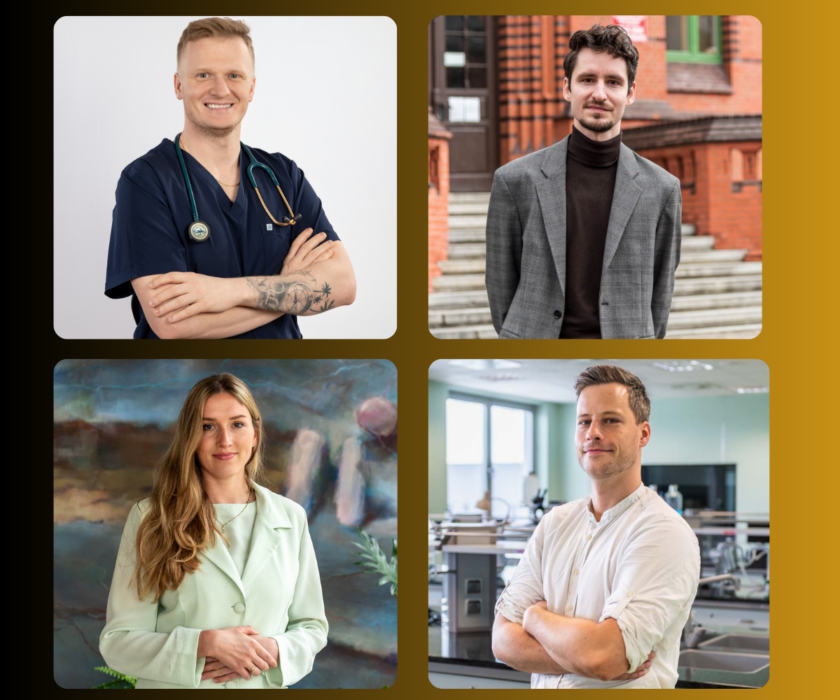
Four researchers from Wroclaw Medical University have been named recipients of the 21st edition of the Minister of Science and Higher Education’s Scholarship Programme for Outstanding Young Scientists. The awards were granted to Assoc. Prof. Mateusz Babicki, Dr Kamila Maciejewska, Assoc. Prof. Paweł Krzyżek, and Dr Tomasz Urbaniak in recognition of their exceptional scientific achievements and research potential.
The scholarship programme supports the most promising early-career researchers by providing financial stability and enabling them to pursue ambitious scientific projects. This year’s competition attracted 1,640 applications, from which 230 laureates representing 54 scientific and artistic disciplines were selected. Each recipient will receive funding for a period of three years, with the Ministry allocating more than PLN 44 million to the programme.
Among the 25 awardees in medical and health sciences, four represent Wroclaw Medical University.
Assoc. Prof. Mateusz Babicki

Assoc. Prof. Mateusz Babicki from the Department of Family Medicine combines his work as a primary care physician with scientific research, teaching, and expert advisory activities. His research focuses on challenges encountered in everyday clinical practice, examining them from the perspectives of patients, public health, and healthcare organization.
His scientific interests include chronic diseases, mental health, vaccination, antimicrobial resistance, telemedicine, and the development of primary healthcare. One of his most significant research areas is long COVID. He has investigated the prevalence, symptoms, and risk factors of persistent post-COVID complications, as well as the influence of vaccination and viral variants on disease progression. His work led to the development of the LC Risk Score, a tool designed to help primary care physicians identify patients requiring closer follow-up.
His broader research also addresses sleep disorders, quality of life, obesity, metabolic diseases, psychiatric stigma, and substance use. He has authored more than 100 scientific publications with a combined Impact Factor exceeding 270 and has received numerous awards, including Rector’s Awards and recognition for achieving the highest score in Poland in the national specialization examination in family medicine. His work bridges clinical practice, research, and healthcare policy, contributing to improvements in patient care and primary healthcare systems.
Assoc. Prof. Paweł Krzyżek
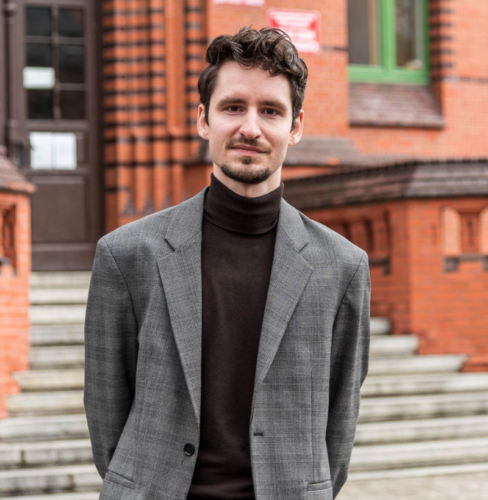
Assoc. Prof. Paweł Krzyżek from the Department of Microbiology specializes in medical microbiology, bacterial infections, and antimicrobial resistance. His research focuses on Helicobacter pylori, a bacterium associated with peptic ulcer disease and gastric cancer.
His work seeks to explain why treatment of H. pylori infections is not always successful and how bacteria survive despite antibiotic therapy. In particular, he investigates bacterial biofilms, antibiotic efflux mechanisms, dormant bacterial forms, and antimicrobial tolerance, helping to explain why some infections remain difficult to eradicate.
Assoc. Prof. Krzyżek has published 54 scientific papers with a combined Impact Factor exceeding 214, has an h-index of 17, and has completed nearly 200 peer reviews for international journals. He is also listed among the World’s Top 2% Scientists and participates in the international Helicobacter pylori Genome Project, funded by the U.S. National Cancer Institute and involving research teams from around the world.
He currently leads a National Science Centre Miniatura project investigating how antibiotics affect the structure and properties of H. pylori biofilms. His research addresses one of the greatest challenges facing modern medicine: antimicrobial resistance and the treatment of persistent bacterial infections.
Dr Kamila Maciejewska
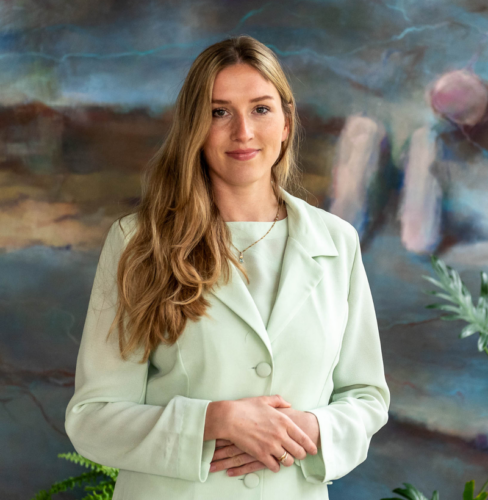
Dr Kamila Maciejewska from the Department of Biochemistry and Immunochemistry conducts interdisciplinary research combining chemistry, cell biology, and biomedical engineering. Her work focuses on nanomaterials that can precisely measure temperature inside cells, respond to light, and generate heat in a controlled manner. These technologies have the potential to support future cancer diagnostics and therapies.
Her research has led to the development of nanoparticles capable of both monitoring and producing heat at the cellular level. She is currently investigating how cancer cells respond to this localized nanoheating and which mechanisms of cell death can be triggered. One outcome of her work is a device for measuring nanoparticle-induced heating in cancer cells, which has been submitted for patent protection.
Dr Maciejewska collaborates with research teams in Portugal and Italy and has contributed to projects on immune responses, angiogenesis, and the tumour microenvironment. She has authored more than 20 scientific publications, received over 600 citations, holds an h-index of 14, and is the inventor or co-inventor of several patents. She previously received a START scholarship from the Foundation for Polish Science and a scholarship from the Polish Academy of Sciences for outstanding young researchers. In the 2026–2027 academic year, she will conduct research at San José State University under the Fulbright Senior Award, investigating how nanoparticles are taken up by cells.
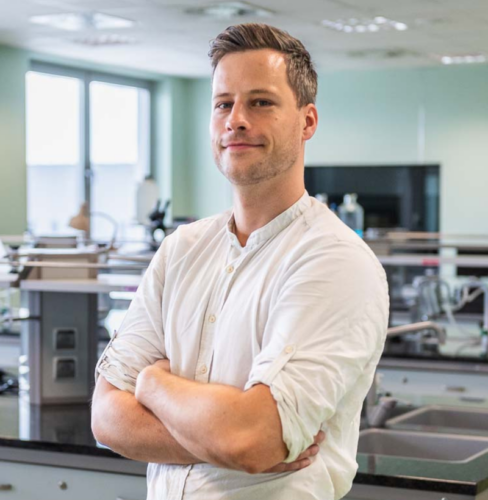
Dr Tomasz Urbaniak
Dr Tomasz Urbaniak from the Department of Physical Chemistry and Biophysics works at the interface of biomedical engineering, polymer chemistry, pharmacy, and regenerative medicine. His research focuses on designing advanced biomaterials capable of delivering drugs, controlling the release of active compounds, and interacting with cells and tissues in a predictable way.
A major area of his work involves biodegradable polymers that gradually release medicines at the desired site and time, improving both the effectiveness and safety of treatment. He has also developed polymer-based prodrugs for antiviral and antibacterial therapies and investigates environmentally friendly methods of producing biomedical polymers.
Dr Urbaniak is a co-inventor of a Polish patent covering an innovative microwave-assisted method for producing biodegradable poly(ε-caprolactone) using non-toxic organic initiators. He currently leads two projects funded by the National Science Centre. One explores core–shell microparticles as drug delivery systems, while the other develops biomaterials for the controlled release of growth factors to support the treatment of chronic wounds.
His scientific achievements include publications in leading international journals, a research fellowship at the Institute of Macromolecular Chemistry of the Czech Academy of Sciences, supervision of master’s students, and co-authorship of academic textbooks. His research combines fundamental materials science with practical applications that may contribute to future advances in drug delivery and tissue regeneration.