A PhD Candidate’s Study Selected for TOP PICK 2025
2026-01-16
Commercialisation Compendium – a practical guide from idea to implementation
2026-01-20
ADHD does not go away with age. It significantly affects the daily functioning of nearly one million adults in Poland, yet diagnosing the condition remains a major clinical challenge. This gap inspired an implementation doctorate aimed at improving ADHD diagnosis in people over 18. The innovative project—selected in a national competition run by the Polish Ministry of Science and Higher Education—is being developed by Julia Siembiga, a PhD student at the Doctoral School of WMU.
For the past nine years, the Ministry has operated the “Implementation Doctorate” programme, which selects and funds the most innovative and socially impactful research projects. Developed in collaboration with technology partners, these projects aim to deliver solutions ready for real-world use.
This year, 391 proposals were submitted; 164 received funding, including a research project to be carried out at Wroclaw Medical University. The doctoral thesis, titled “Gamified ADHD Diagnostics in Adults Using Machine Learning and Multimodal Data,” is authored by Julia Siembiga, a neuroscience graduate of University College London. The tool she is developing has the potential to transform how neurodevelopmental and mental health disorders are diagnosed.
Objective Data Instead of Subjective Assessment
ADHD—attention-deficit/hyperactivity disorder—was long considered a childhood condition. Today, it is well established that it also affects adults, with significant consequences for professional, family, and social life. Estimates suggest that ADHD may affect up to 3.1% of the population, meaning that around one million adults in Poland live with the disorder.
Diagnosing ADHD in adults is particularly challenging. Symptoms often differ from those seen in children and frequently co-occur with anxiety disorders, depression, or addictions. Current diagnostic pathways rely heavily on interviews and questionnaires—tools that are inherently subjective.
“The diagnostic outcome depends on how patients describe their experiences and how clinicians interpret them. This can lead to incomplete, inaccurate, or significantly delayed diagnoses,” says Prof. Dorota Frydecka from the Department and Clinic of Psychiatry at Wroclaw Medical University, the doctoral supervisor. “Our project will collect objective biological and behavioural data, providing a comprehensive picture of patient functioning and supporting clinical decision-making.”
A Computer Game Instead of Traditional Tests
The doctoral project will result in a diagnostic platform that records behavioural patterns and physiological responses while the patient engages in an interactive computer game. This is where gamification comes in—the use of game-based mechanisms in the diagnostic process.
Gamification makes the assessment less stressful and more engaging, while simultaneously enabling the collection of reliable, objective data on cognitive functioning.
The platform will gather behavioural data, including sustained attention, as well as biometric measures, explains Julia Siembiga. Eye-tracking will show where and for how long a patient looks; pupillometry will measure reactivity and subtle pupil-size changes reflecting cognitive and physiological processes such as attention and arousal. Over time, we also plan to include heart rate variability (HRV), an indicator of stress regulation. Signals from the body don’t lie—they can detect attentional control problems or impulsivity even when a person cannot articulate them.
The project’s multimodal approach integrates data from multiple sources to create a more accurate and reliable patient profile. Artificial intelligence (AI) algorithms will analyse these data to identify predictive markers—subtle, invisible patterns characteristic of ADHD.
This will allow us not only to confirm the presence of ADHD, but also to determine its severity and clinical subtype, Siembiga adds. That, in turn, will support personalised treatment—from psychoeducation and pharmacotherapy to cognitive training.
A Step Towards Precision Medicine
The researchers emphasise that AI will not replace clinicians, but rather support them by providing objective, transparent data that improves interpretation and decision-making. According to Prof. Frydecka, the project aligns with global trends in precision medicine and digital health assessment tools.
By combining clinical expertise with cutting-edge technology, we can fundamentally change how adult ADHD is diagnosed. Instead of relying solely on general diagnostic criteria, clinicians will receive a detailed, individualised picture of a patient’s functioning—enabling faster, more accurate diagnosis and timely support.
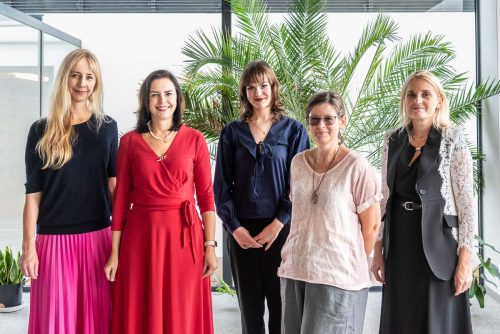
The doctorate will be conducted in collaboration with Łukasiewicz Research Network – PORT Polish Center for Technology Development and is planned as a four-year project. It forms part of the P4Health initiative, which promotes precision medicine and the digital transformation of healthcare systems.
The ultimate goal is to develop a tool that improves ADHD diagnosis and, in the future, can be adapted to assess other mental health disorders—enhancing patient quality of life and the overall efficiency of Poland’s healthcare system.
Photo: Tomasz Walów