Free webinar: CRISPR/Cas9: principles of action and practical applications in biology and medicine
2025-12-30
Public Health – a Degree with a Future
2026-01-08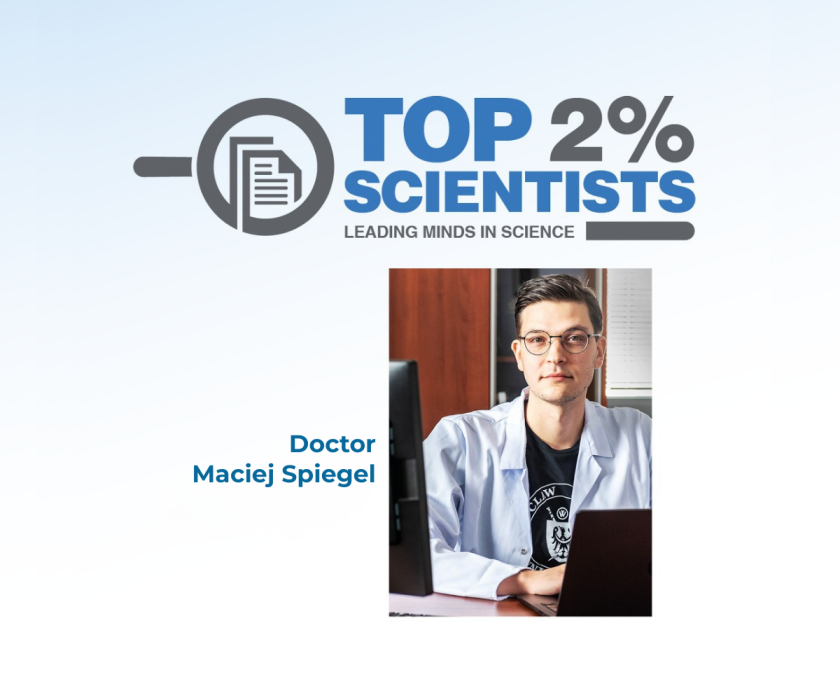
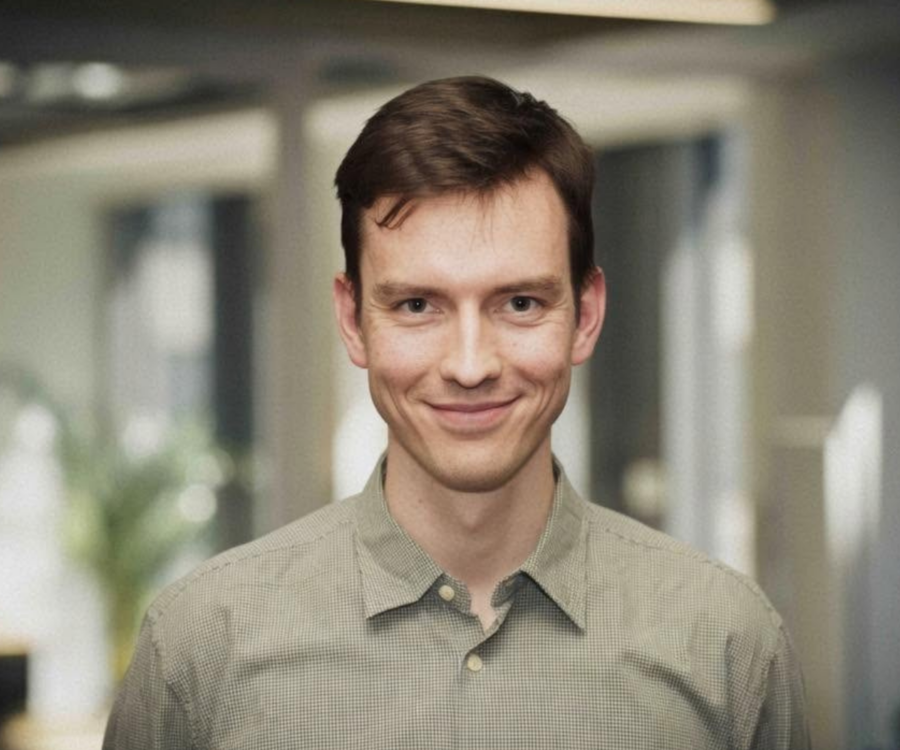
Maciej Spiegel, PhD, an assistant professor in the Research Group at the Department of Organic Chemistry and Drug Technology, has been named in the latest edition of the World’s Top 2% Scientists ranking in the 2024 achievements category.
An unexpected start to a new research pathway
Spiegel’s research lies at the intersection of computational chemistry and pharmaceutical sciences. Using molecular modelling, he examines how xenobiotics act at the molecular level—identifying mechanisms of activity, factors that modulate them, and designing new molecules with therapeutic potential. Rather than concentrating on a single niche, he develops several research threads in parallel: from senotherapeutic activity and photosensitizers used in photodynamic therapy to enzyme activity and receptor interactions.
The path into this field was, as he openly acknowledges, unplanned. He began research during his third year of pharmacy studies and, after long hours spent in wet laboratories, encountered computational chemistry as an alternative approach—one that significantly shortens the distance between an idea and a result. Molecular simulations can deliver observations and conclusions comparable to experimental work, but in a fraction of the time. The growing international interest in his research demonstrates that increased efficiency does not come at the expense of scientific depth.
Achievements as a warm-up, not a finish line
Asked about his most significant achievements, Spiegel is candid in his assessment: he believes the most important work still lies ahead. He compares his scientific career to a marathon—current accomplishments represent preparation rather than completion, while the finish line remains some distance away. This perspective continues to motivate him to pursue ambitious research questions.
Shaped by the broader ecosystem of science
Rather than identifying a single publication or discovery that defined his thinking, Spiegel points to the cumulative influence of scientific practice itself. Publications, conferences, research stays, and discussions with other researchers collectively shaped his approach to science and sustained his curiosity.
Why university-based research matters
While molecular modelling is well established in industry, research conducted at universities allows exploration of areas that are too early-stage, too risky, or not immediately commercially viable. Spiegel focuses on the mechanisms of xenobiotics—including substances that may never become drug candidates but still play a role in human biology or the environment. Such foundational work often provides the basis for later therapeutic development.
Looking ahead—and a word of advice
Asked what he would pursue with unlimited resources, Spiegel notes that he has many ideas but prefers to keep them confidential for now, adding that a strong, interdisciplinary team would be essential for their realisation.
His advice to early-career researchers is concise:
Persistence wins. Achievements are outcomes, not goals—and sometimes the most unconventional ideas prove to be the most valuable.